

From Classroom to Career: Who Builds the Workforce with Commissioner Alberto Treviño III
The path from a classroom to a career is rarely a straight line. Students, educators, employers, families, community leaders, and public servants build it one decision at a time, knowing opportunity doesn't happen by accident.
When Commissioner Representing Labor Alberto Treviño III takes the stage as keynote speaker, the focus is not only on jobs. It is on people. It is on preparation. It is on the shared work of helping students see a future they can reach, then giving them the tools, training, confidence, and support to get there.
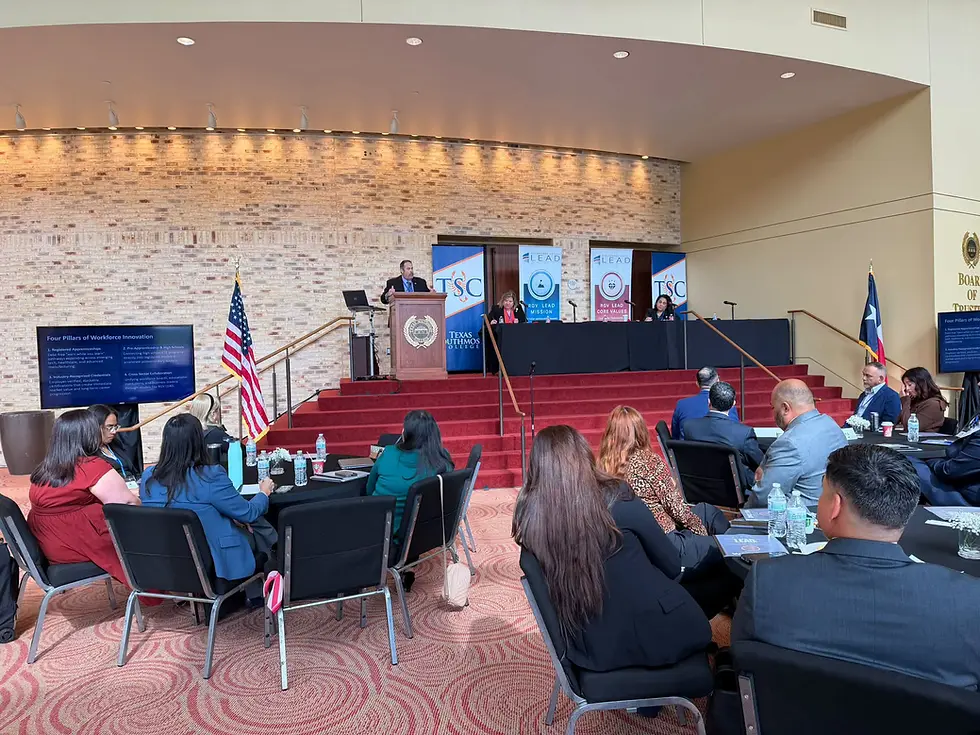
A sincere thank you goes to Texas Southmost College for sponsoring RGV LEAD and supporting this important regional conversation. Partnerships like this help connect education with real career pathways, especially in communities where talent is ready and opportunity must be built with care.
The labor voice keeps the conversation grounded.
Commissioner Alberto Treviño III’s role as Commissioner Representing Labor brings an essential view to the table. Workforce planning must include the people who do the work, not only the systems that prepare them or the employers who hire them.
A labor-centered view helps keep the focus on quality, not just quantity. It reminds everyone that a workforce is made of people with families, goals, responsibilities, and potential.
That is the heart of From Classroom to Career: Who Builds the Workforce with Commissioner Alberto Treviño III. The answer is shared. No single school, agency, employer, or public official can build the workforce alone.
Employers must help build the talent they need
Employers who engage early can change outcomes.
They can visit classrooms, host job shadowing days, support internships, advise training programs, and explain what entry-level workers need to know. They can also make their hiring practices clearer so students understand the steps between training and employment.
Employers also benefit when they invest in local talent. They reduce the distance between education and hiring. They build trust with schools. They help students see that good careers exist close to home.
The bigger conversation belongs to the whole community
A healthy workforce system asks everyone to take responsibility.
Educators prepare and guide. Employers open doors and explain needs. Colleges create flexible routes. Public leaders align resources. Families encourage persistence. Students bring effort, curiosity, and courage.
The message from this larger conversation is clear: career readiness is not a single program or event. It is a shared commitment. With leaders like Commissioner Alberto Treviño III bringing labor’s perspective forward, and with partners like Texas Southmost College supporting RGV LEAD, the region can keep strengthening the bridge between learning and work.