

Building Brighter Communities Through Partnership in the Rio Grande Valley

Strong communities do not grow by chance. They grow when people show up, listen closely, share what they know, and commit to the work that comes next.
That spirit was at the center of PNC’s Building Brilliant Communities Community Stakeholder Meeting for the Texas Border Region in McAllen, TX. The gathering brought together community voices focused on a shared goal: creating more opportunity across the Rio Grande Valley.
Community work starts with the places people call home.
RGV LEAD is privileged to be part of the conversation.
The Rio Grande Valley has long been shaped by resilience, family, enterprise, culture, and cross-border connection. Its future will be shaped by how well community leaders, employers, educators, financial institutions, nonprofits, and residents work together. Meetings like this matter because they create space for honest dialogue and practical partnership.
Meaningful conversations help communities see what is possible
Progress often begins with a simple act: people sitting together and speaking clearly about what their communities need.
In the Rio Grande Valley, those needs can vary by neighborhood, age group, industry, and family situation. Some conversations focus on access to education and training. Others look at small business support, housing, transportation, child care, financial education, or career pathways. Each topic is connected to the others.
That is why broad community input matters. No single organization can fully understand every challenge or solve every problem alone. Stronger answers come from hearing many perspectives, including people who work closely with families, students, entrepreneurs, and job seekers every day.
The PNC stakeholder meeting is valuable when it moves beyond surface-level updates. The best conversations ask direct questions:
Where are people finding opportunity?
Where are families still facing barriers?
What resources already exist, but need stronger connections?
Which partnerships could help more people take the next step?
How can regional growth include more residents, not just a few?
These questions do not always lead to quick answers. They do create a shared understanding. That shared understanding is often the first step toward lasting community investment.
Partnerships can strengthen the regional workforce
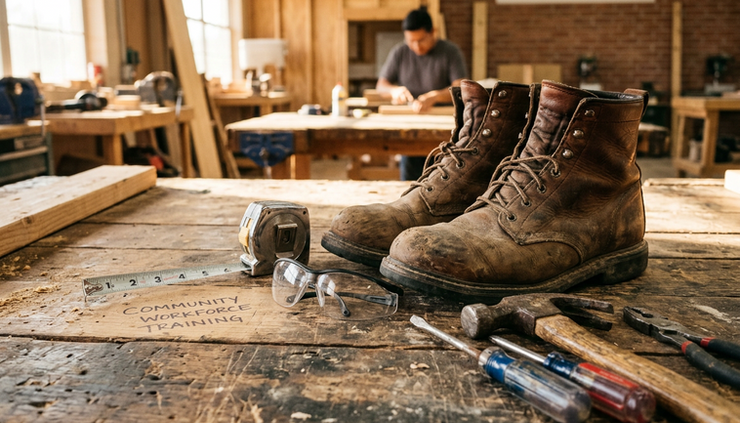
A strong regional workforce needs more than job openings. It needs clear pathways that help people prepare, gain experience, build confidence, and grow over time.
In the Rio Grande Valley, workforce development is closely tied to education, local business growth, and family stability. When people can access training that connects to real employment needs, the entire region benefits. Workers gain greater earning potential. Employers find local talent. Families build more financial stability. Communities keep more opportunity close to home.
This is where partnership becomes powerful.
Schools and training providers can help prepare learners for in-demand roles. Employers can share what skills are needed on the job. Nonprofits can help residents overcome barriers that make training or employment harder to access. Financial institutions can support programs that encourage long-term economic mobility. Local leaders can help align efforts so resources are easier to find and use.
No one partner carries the whole responsibility. Each brings a different strength.
The goal is not only to fill jobs. The goal is to build pathways that help people move forward with dignity and purpose.
That kind of work takes patience. It takes trust. It also takes repeated conversations, because workforce needs change as industries grow, technology shifts, and families face new pressures.
Investment in the Rio Grande Valley is investment in the future
The Rio Grande Valley is not a place waiting to be defined by outside attention. It is a region with deep strengths, including young talent, strong family networks, entrepreneurs, educators, agricultural roots, health care growth, and international ties.
Investing in this region means recognizing those strengths and building on them.
Community investment can take many forms. It may support early childhood education, small business development, affordable housing efforts, career readiness, community facilities, financial wellness programs, or nonprofit capacity. The best investments respond to what local stakeholders already know: communities thrive when resources match real needs.
PNC’s Building Brilliant Communities initiative brings attention to this kind of work. By gathering community stakeholders in McAllen, PNC helped create a forum for connection and shared focus. That matters because regional progress often depends on whether good ideas can find the right partners.
A program may already be serving families well, but need more visibility. A training effort may be ready to grow, but need employer input. A nonprofit may understand a challenge clearly, but need stronger support to meet demand. A business may want to hire locally, but need help connecting with prepared candidates.
When these groups meet, gaps become clearer. So do solutions.
Community trust grows through steady commitment
One meeting can spark ideas, but stronger communities are built through steady action.
Trust grows when organizations keep showing up. It grows when they listen before acting. It grows when commitments are followed by real support. It grows when residents see that conversations lead to better access, better programs, and better outcomes.
That is especially true in regions with complex needs and strong local identity. The Rio Grande Valley deserves investment that respects its culture, its people, and its long-term promise. Community work cannot be one-size-fits-all. It must be rooted in local relationships.
The most useful partnerships are often built through small, consistent steps:
Sharing information across organizations
Connecting residents to existing resources
Supporting programs with proven local trust
Creating clearer routes from education to employment
Listening to community members before setting priorities
Celebrating progress while staying honest about remaining needs
These steps may sound simple, but they require coordination and care. They also require humility. A stronger region is built by many hands, not by one institution alone.
A shared commitment to brighter communities
Being part of the conversation at PNC’s Building Brilliant Communities Community Stakeholder Meeting in McAllen was a meaningful reminder of what regional progress requires.
It requires people who care enough to listen. It requires partners willing to work across sectors. It requires investment in workforce, education, opportunity, and community well-being. Most of all, it requires the belief that the Rio Grande Valley’s future is worth building together.
Thank you to PNC for bringing community stakeholders together and for your continued commitment to building stronger, brighter communities.
The work ahead will take time, but the direction is clear: when communities connect around shared purpose, opportunity grows.